
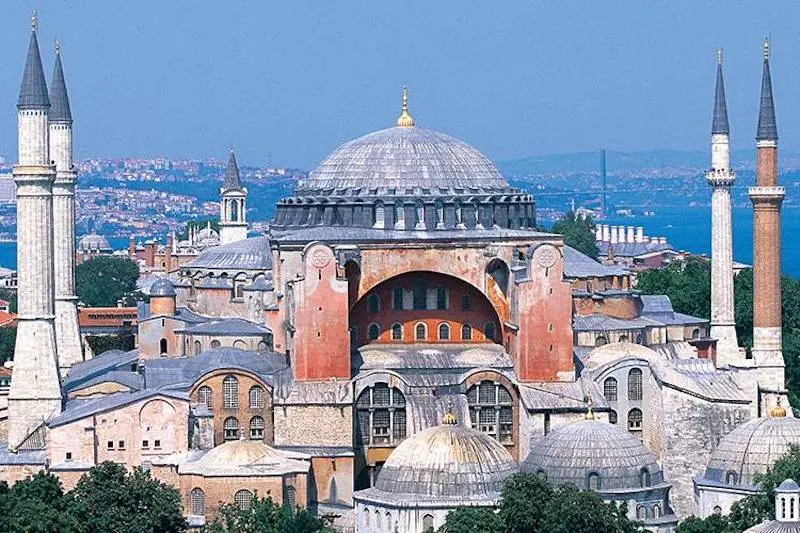
Hagia Sophia in Istanbul features a rich and layered collection of artwork reflecting its complex history as a Christian cathedral, an Islamic mosque, and a secular museum. The building’s interior is adorned with elaborate Mosaics created by Byzantine artists during its cathedral period, depicting biblical and historical scenes, portraits of emperors and empresses, and religious figures such as Jesus Christ, the Virgin Mary, and saints. Notable mosaics include the Deesis mosaic, which portrays Christ flanked by the Virgin Mary and John the Baptist, and the Empress Zoe mosaic, showing Empress Zoe with her husband, Constantine IX Monomachos. The Virgin and Child mosaic, located in the Apse, is another prominent example, believed to reconstruct an earlier work destroyed during the Iconoclastic period.
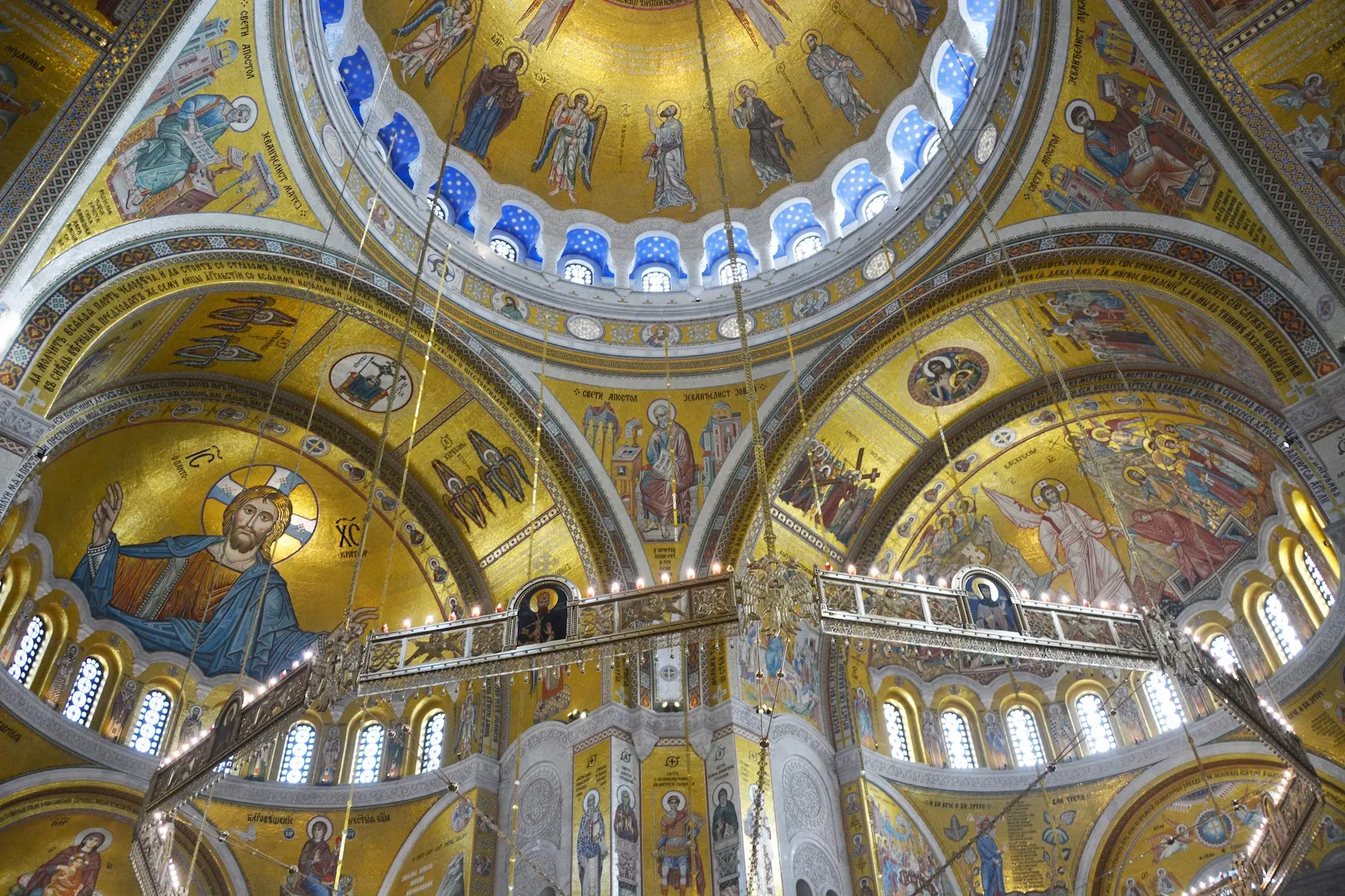
The mosaics are crafted from thousands of small glass and stone pieces (tesserae) set into a gold background, creating a luminous effect that enhances their spiritual significance. The artists carefully considered lighting, with the gold tesserae arranged in patterns that reflect light, and the placement of mosaics often aligns with actual light sources from Clerestory windows, creating a naturalistic interplay between the artwork and its environment. Some mosaics, particularly those in the dome’s pendentives, were plastered over during the Ottoman period and later uncovered during 19th-century restorations.
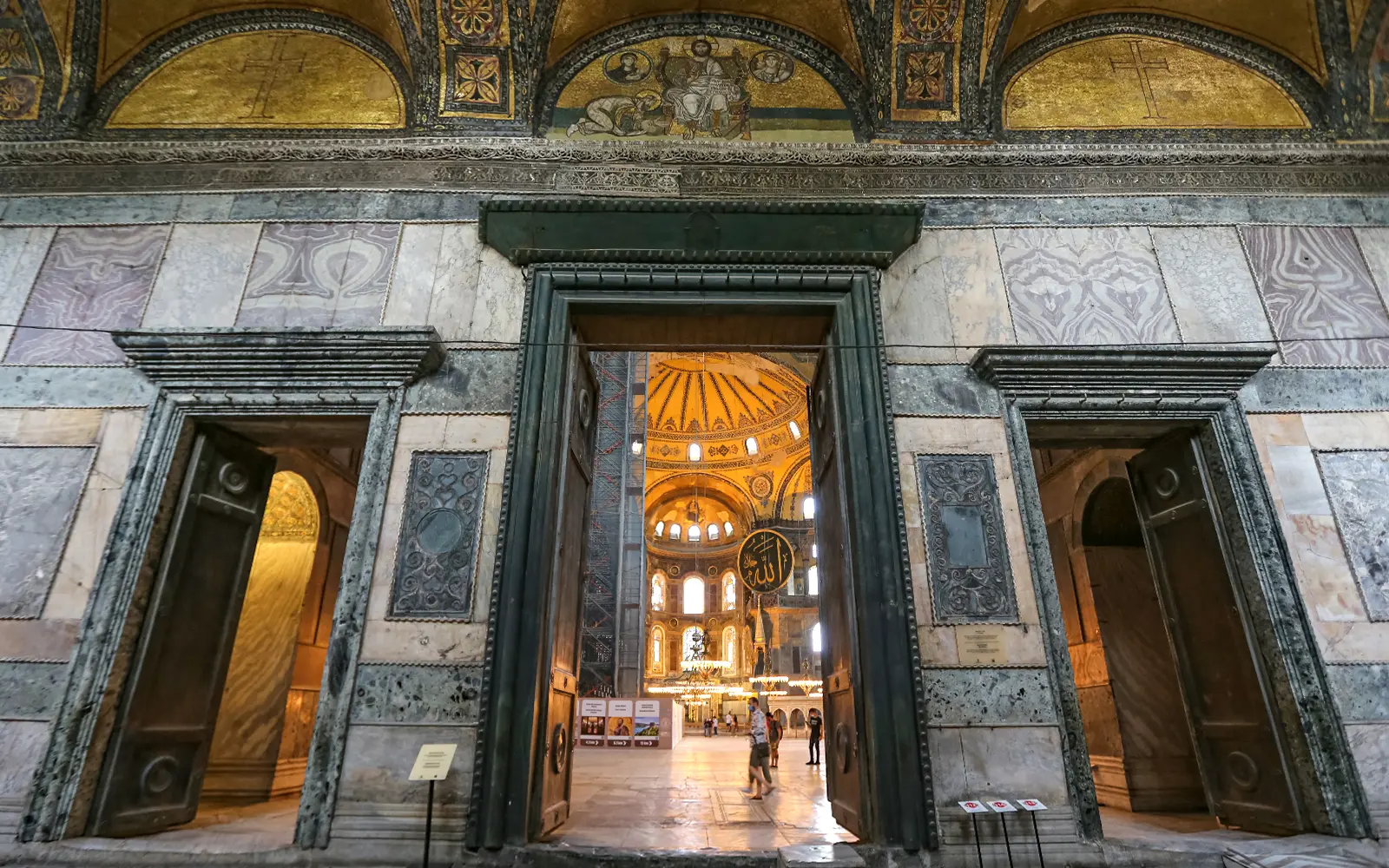
In addition to the mosaics, Hagia Sophia features Islamic calligraphy added during its time as a mosque, including verses from the Quran, the names of Allah and Muhammad, and other religious texts, often executed in gold leaf on a blue background. These calligraphic elements complement the Byzantine mosaics and reflect the building’s dual religious heritage. The marble floors are made from various colored stones, including white marble, green porphyry, and red porphyry, arranged in intricate geometric patterns.
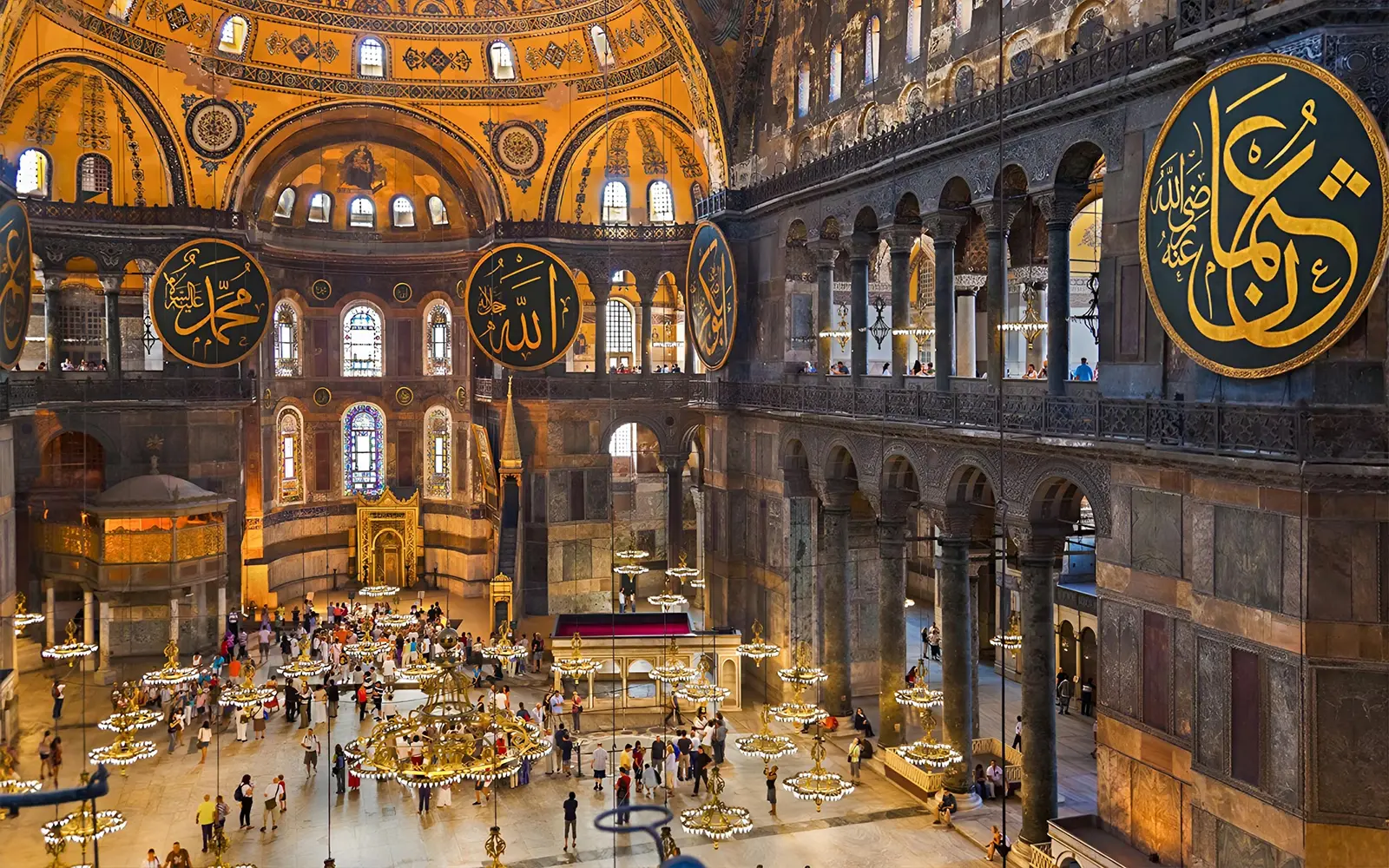
Despite its historical significance, not all mosaics are visible today. Many were covered with plaster during the Ottoman era due to religious sensitivities, and some remain concealed, especially during Muslim prayers, while others have been uncovered and restore. The building’s architectural grandeur, including its massive dome supported by pendentives, also contributes to its artistic and spiritual impact, with the dome’s design and lighting creating a sense of dematerialization and divine presence.
Sources:
- Smarthistory – Hagia Sophia as a mosque
- 504 Gateway Time-out
- Hagia Sophia | Art History I
- Inside Hagia Sophia | Mosaics & Artifacts
- 504 Gateway Time-out
- Hagia Sophia | The Metropolitan Museum of Art
- Smarthistory – Late Byzantine naturalism: Hagia Sophia’s Deësis mosaic
- Some of Hagia Sophia’s mosaics will be covered during Muslim prayers - The Art Newspaper - International art news and events
- Hagia Sophia (Istanbul) | Whose Culture?